
Marion County Most Wanted Sources
Fugitive hunting in Marion County runs through the Sheriff's Office Warrants/Fugitive Apprehension Unit. The unit's official page explains how the agency shares wanted-person information. It has no public search box, though. So you cannot type in a name there to confirm or clear a warrant.
The public list with photos lives elsewhere. Crime Stoppers of Marion County, a nonprofit tip partner the sheriff links to, posts the fugitives one by one. Each post usually shows a photo, the person's name, sex and race shorthand, a date of birth, and the listed charges. By mid-August 2026 the archive held 1,061 posts. That figure is cumulative, not proof that many people are still at large. New batches appear without a fixed weekly schedule. A person's status can also change after an arrest, surrender, recall, or court action. Open the live post before acting on anything.
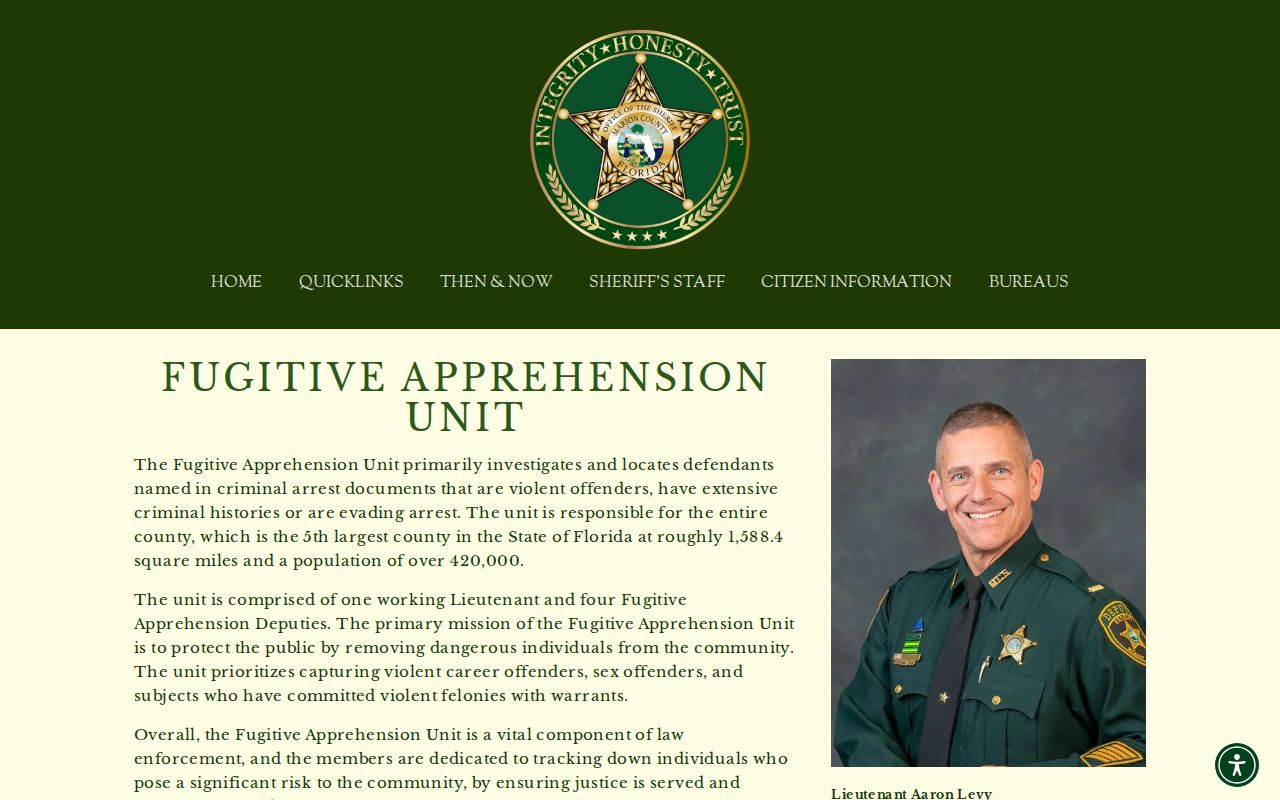
This source keeps two things distinct: the sheriff's confirmation and apprehension work, and the public partner list built to gather tips.
Read Marion County Wanted Listings
A wanted listing is a request for public help, not a court judgment. Read the record as a set of identifiers and allegations. Similar names are common, and photographs can age. Compare several details before sending a tip, then let law enforcement assess the information. Do not contact the named person for proof or post an accusation elsewhere.
The Marion County partner interface has displayed the fields below. Labels and available details can change from post to post, so an empty field should not be filled by guesswork.
| Listing field | What it means |
|---|---|
| Photograph | An identifying image supplied for the fugitive post, not proof of present location or guilt. |
| Name | The name associated with the posted warrant charge. Confirm it with date of birth and other identifiers. |
| Sex and race shorthand | Brief descriptive fields used by the publisher. They do not establish identity by themselves. |
| Date of birth | A key identifier that helps separate people with similar names. |
| Warrant charge or charges | The claimed legal basis for the post. It is not the final court disposition. |
| Tip controls | Links to report information or check the status of a previously submitted tip. |
Terms matter. A warrant is a court command authorizing a specific legal action, often an arrest. A disposition is the recorded outcome, such as dismissal, plea, adjudication, acquittal, or sentence. Those ideas should not be treated as interchangeable.
Use Marion County Fugitive Posts
Keep the task narrow. Browse on the official partner site, compare stable identifiers, and hand over useful facts without taking any enforcement action on your own. The sheriff and the tip program decide what follows.
- Open the sheriff-linked Crime Stoppers All Fugitives page and select the live individual post.
- Compare the name, date of birth, photograph, and listed warrant charge. Do not rely on a name alone.
- Read the post for status and tip instructions. A cached result or copied social post may be old.
- Keep a safe distance. Send location, vehicle, or other useful facts through the official tip channel.
- For custody after an arrest, use the Marion County jail and booking search. Then check the Clerk for the case outcome.
A fresh jail entry tells you one thing. The person was booked. It may not resolve every warrant or pending case. For filed counts, hearings, dismissal, adjudication, or a sentence, the Marion County Clerk's docket is the better source.
Want to see current photo posts? Use the Crime Stoppers most wanted interface.
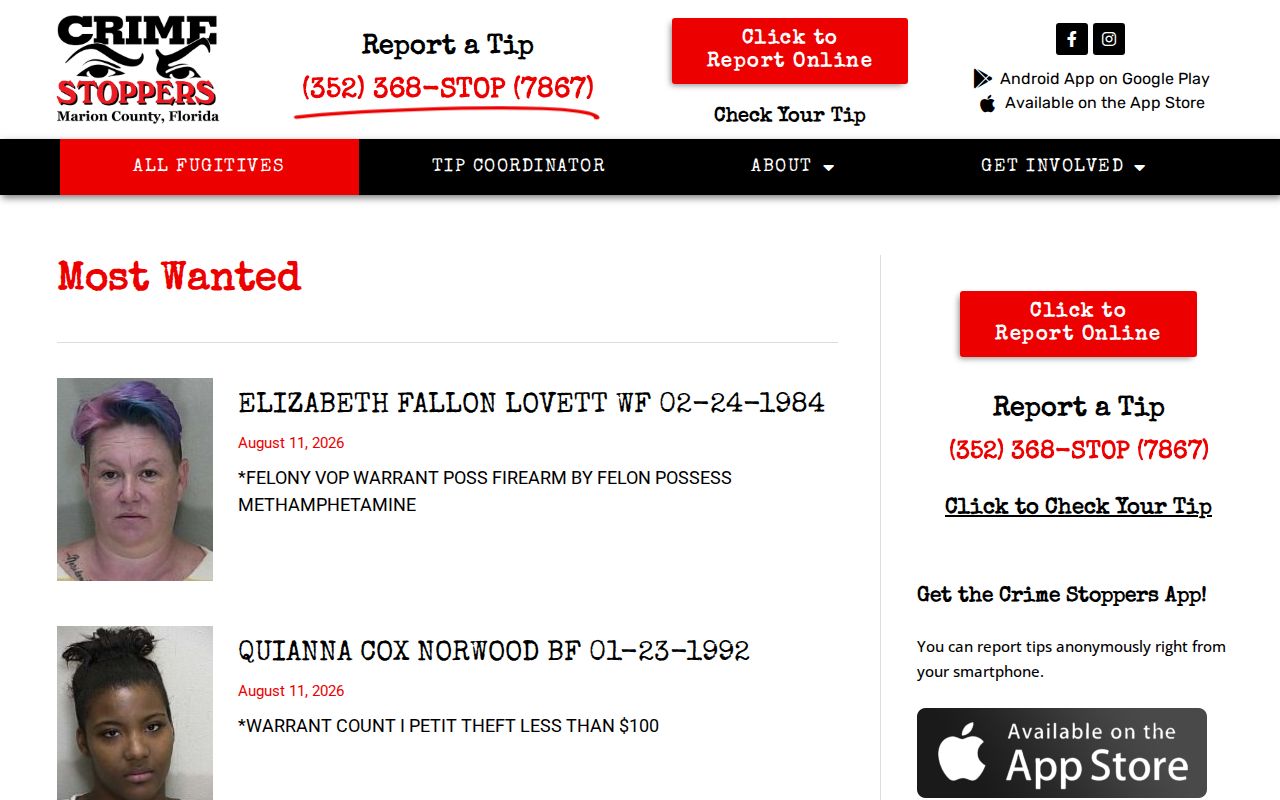
The screenshot shows the source interface itself rather than copying the wanted photographs into a local gallery.
Note: A removed post may reflect a status change, but only the sheriff or issuing court can confirm what changed.
Check Marion County Warrants Safely
A fugitive list has limits. It cannot confirm every named person holds an active Marion County warrant. MCSO offers no verified, self-service warrant query by name. So pair the Marion County Clerk's criminal case record with direct sheriff confirmation. Use exact identifiers. A missing web result is not legal clearance.
- Start at the Marion County Clerk Search Records hub and open Search Court Records.
- Search by full party name and match the case type, filing details, and date information. County Criminal handles misdemeanors, criminal traffic, and local ordinance matters. Circuit Criminal handles felonies.
- Read the docket for a warrant entry, failure to appear, bond forfeiture, recall, or later court action. Online disposition entry can lag.
- Call MCSO at 352-732-8181 for confirmation when the identity or status remains uncertain. The public wanted list is not enough.
- If the warrant may concern the person searching, contact a Florida attorney or the issuing court and arrange a lawful response. Do not rely on online absence.
The Clerk also offers a remote viewer through Civitek OCRS for Marion County. Some records require registration, counter service, or file retrieval. Inactive files may sit off-site. Many older matters demand extra work. Those limits are exactly why a thin digital result cannot safely settle warrant status.
Note: Online absence is not warrant clearance, because status, access limits, and off-site records can affect what a search returns.
Marion County Warrant Types
Not every Marion County warrant is the same kind of record. The docket and the issuing court state the exact legal basis. These broad categories help explain why the next step differs. Still, the live court entry controls.
| Record or event | What to verify | Safe response |
|---|---|---|
| Arrest warrant | The issuing case, named person, alleged offense, and current status. | Confirm with MCSO or the court; counsel can arrange a lawful response. |
| Failure-to-appear warrant | The missed court event and any later recall or bond action. | Contact counsel or the issuing clerk/court promptly. |
| Bond forfeiture entry | Whether the docket also records a warrant, new hearing, or later order. | Use the full docket, not a single event label. |
| Wanted-list post | Whether the live post remains active and which warrant charge it cites. | Send tips only; do not treat the post as a complete warrant report. |
A bench warrant is a court-issued order. It often ties to a missed court duty. An arrest warrant generally authorizes arrest on the basis stated in the warrant itself. In a Marion County case, precise language matters more than the everyday label.
Send Marion County Fugitive Tips
Crime Stoppers of Marion County takes anonymous tips for the local fugitive program. Its public interface includes "Report a Tip" and "Check Your Tip" controls, plus a tip app. That app belongs to Crime Stoppers. It is not an MCSO booking-photo app, a jail roster, or a warrant-clearance tool.
Marion County Fugitive TipsMCSO fugitive information: 352-732-9111
Crime Stoppers: 352-368-STOP (7867)
Online: Crime Stoppers “Report a Tip”
Emergency or immediate danger: 911
The program may offer a reward under its current rules. Nothing there is automatic. Follow the live instructions and keep any tip code you need to check status. Skip the guesses. Do not confront anyone. Never share victim details in public. Give law enforcement facts it can actually check.
Resolve a Marion County Warrant
Think a Marion County warrant has your name on it? Do not guess. Talk to a lawyer or call the issuing court. Work out a lawful way to respond. Third-party badges mean nothing. A name missing from an online list is not proof you are clear, and web listings are no tool for dodging service of papers. The court or sheriff can pull the actual case and tell you exactly where things stand.
Once a booking happens, the paperwork splits in two directions. The jail tracks intake and confinement. The Clerk of Court holds everything filed after that, from hearings and pleas to dismissals, rulings, and sentences. First appearance, bond review, and arraignment all belong to the court side. Keep in mind a bond figure is a deposit, not a fine. Trace the record through to its final outcome before you decide what it means.
- Booking
- The jail intake process after an arrest.
- Bond
- A court-set condition tied to release while a case is pending.
- Arraignment
- A court stage at which charges and a plea are addressed.
- Disposition
- The recorded result of the case or a charge.
Direct confirmation also guards against identity errors. Match more than a name, note the source and date, and preserve the distinction between an allegation and a proven result.
Marion County Wanted Posts and Alerts
The sheriff's office keeps its own social feeds, and they are worth knowing. MCSO runs verified accounts on Facebook, Instagram, and YouTube. Posts there cover public notices, major arrest updates, and calls for help finding wanted people. Treat these channels as a supplement. They are no substitute. Editors pick what appears there, so plenty of fugitive cases never make a post, and none of it replaces the live wanted page, the court docket, or a call to the sheriff for confirmation.
No MCSO-branded app for Marion County, Florida could be confirmed. Watch out for that. Several other states have counties named Marion, and their apps will not help you here. The county's Alert Marion system is different. It sends warnings about storms, police emergencies, missing persons, and evacuations. New bookings are outside its scope. VINE works the other way. Once registered, it can tell you when someone specific moves in or out of custody, though it offers no wanted list and no booking photos.
Before you act on anything shared online, check the date. Confirm the account really belongs to the agency. Verify against the current official record. An old wanted post can linger long after the person behind it was located.
Note: A verified social account is still a selective notice channel, not the complete Marion County warrant record.